On Tuesday, Insomniac Games released the most reverent Wolverine anybody has ever built and posted the lowest score of its Marvel run, and by Wednesday the internet had renamed its signature mechanic “fart gas.” On Friday, Sony opens a Resident Evil movie by a director who flatly refuses to tell the story of the games, and it is sitting at 96 percent with tracking that would double the franchise’s best-ever opening. Three days apart. One argument. I have been building toward this argument since the summer of 1991, when a magazine taught me that a comic book was worth more money if I never read it.
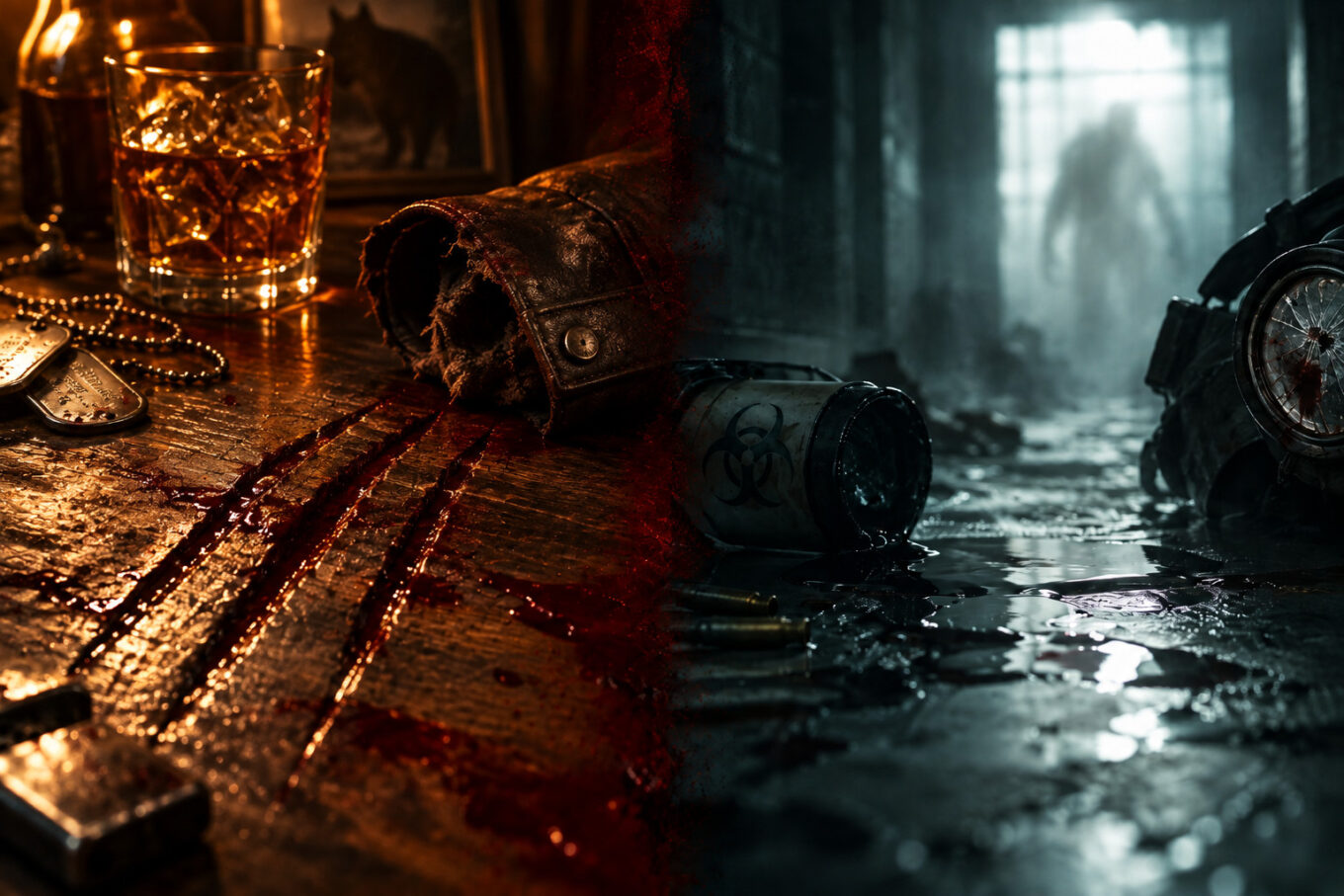
Fidelity to source material is the single most reliable indicator that a piece of entertainment has nothing to say. Not a warning sign. An indicator. Tell me a game or a movie is respectful of the thing it came from and I will give you its Metacritic score within four points, and I will be right often enough that you should stop taking the bet.
That is an overstatement, and I would like to explain the part of it that is not.
This week ran the experiment in public, three days apart, using two of the most valuable pieces of intellectual property on the planet. The result was so lopsided that almost nobody has said it out loud, because the two halves got covered by different writers on different beats who do not read each other.
Insomniac lost Tuesday and Zach Cregger has already won Friday
Tuesday, September 15: Marvel’s Wolverine arrived on PS5 at $69.99 from the studio that spent eight years proving it understood superheroes better than the people making superhero movies. It landed at 77 on Metacritic across 124 reviews. Spider-Man 2 was a 90. IGN gave it a 6. GameSpot gave it a 6. Giant Bomb gave it a 2.5 out of 5 and Eurogamer a 3 out of 5, while Hardcore Gamer gave it a perfect score, which means the reviews are not converging on a verdict so much as arguing with each other about what the game was supposed to be. Kotaku did the cruelest arithmetic available: at a 77, it is the lowest-rated PlayStation Studios game on PS5, underneath Sackboy: A Big Adventure.
A game about a man with knives in his hands scored lower than a game about a knitted sack.
Friday, September 18: Sony opens Zach Cregger’s Resident Evil, shot in Prague between October 2025 and January 2026 for somewhere between $75 and $80 million, depending on where you look. As of this writing it is 96 percent on Rotten Tomatoes across 81 reviews, and Box Office Theory has it tracking for a $44 to $53 million domestic opening. The franchise record is Afterlife‘s $26,650,264 in September 2010. The new one is tracking at roughly double the best opening this series has ever had, in its eighth installment, twenty-four years in.
Here is the part that should have been the story.
Marvel’s Wolverine is faithful. It takes place three years after Logan leaves Team X, it has Bolivar Trask and the Reavers in it, and it handles with real care a character who has been in print since November 1974. Cregger’s Resident Evil is faithful to nothing. There are no game characters in it. The lead is a medical courier named Bryan who has never existed in any Capcom product. Cregger has said he will not tell Leon’s story because the games already told it, and he told The Hollywood Reporter that after test screenings he “stripped out as much of the jokes as possible.” He also says he has never watched a single Paul W.S. Anderson movie, which, as this site laid out on Wednesday, means he has never seen the version of Resident Evil most human beings have actually seen.
One of these men had to answer to fifty-two years of paperwork. The other answered to nobody. The one who answered to nobody made the better thing, it is not close, and I do not think it is luck.
The fart gas is not a bug, it is the thesis
Now to the part the review scores bury completely, which is that people are not politely disappointed in this game. They are dunking on it.
The mechanic doing the damage is the Scent Trail, a blue cloud that blooms on screen to show you where to go and what to pick up. On September 10, Gene Park of The Washington Post called it “fart gas.” The name stuck inside a day. Clips ran all week, Kotaku noted a motorcycle sequence that plays itself, and players began asking Insomniac, not entirely as a joke, for a fart gas toggle.
Then Insomniac answered them, and I need to be exact here, because the studio’s answer is better than anything I could have invented. James Stevenson, Insomniac’s community and marketing director, went on X to explain that the trail is not always on, that it appears when Logan is tracking a particular scent or sound, and that “it represents Logan’s canon mutant super senses and elite tracking ability.”
Canon. He said canon. The defense of the mechanic is the charge sheet.
And the cloud still has no off switch. The game ships with accessibility options, including a Navigation Assist that draws a green guide, and the scent trail is not among the things you are allowed to turn off, because it is not a guidance feature. It is a character trait. Wolverine has had a good nose since 1974, so the blue cloud is on your screen, and you may not decline it.
Sit with that. Fidelity to a fifty-two-year-old character trait was converted into a HUD element, the HUD element took the game away from the player, and when the player asked for it back, the studio explained that the thing on his screen was not a design decision but a fact about Logan. Critics filed the result as a lack of player agency and moved on to the next release. The mechanism was sitting right there with a press statement attached and nobody named it.
You cannot turn off the canon. That is the entire disease, rendered as one blue cloud, and it is the funniest thing that has happened in games this year.
Insomniac, to its credit, is not pretending. The studio says it has been listening and has been cooking hard on the feedback. I believe them, and I think they are going to patch the wrong thing, because you cannot patch an ownership structure.
A 91 earned by people who could not write a sentence in English
Here is the fact that should end the conversation, and it is thirty years old.
The original Resident Evil, the PlayStation one, holds a Metacritic score of 91. That same game is also in the Guinness World Records for Worst Game Dialogue Ever, which it received in 2008 and absolutely deserved. Barry Burton calls Jill the master of unlocking. A ceiling nearly flattens her and he says she was almost a Jill sandwich. I learned those lines in a friend’s basement over one rented weekend in the spring of 1996, off a disc that went back to the Blockbuster out by the highway on Monday morning, and I know them the way other people know the Pledge of Allegiance. We ran the long version of that weekend on Wednesday. I will not do it twice.
A 91 and the worst dialogue ever recorded, in the same object. That is the founding document of this franchise.
So when a fan in 2026 says a Resident Evil movie ought to be faithful to the games, the honest follow-up is: faithful to which part? The tank controls that existed because the hardware could not do anything else? The door-opening animation that existed to hide a load time? The North American release that cut the gore out of the live-action intro and printed it in black and white and shipped fewer ink ribbons than the Japanese version, meaning American kids were playing a harder, uglier, stupider edition of the game and had no way to know it?
Every single thing fans call the soul of Resident Evil began life as a compromise with a disc drive. Capcom knows this. Capcom has remade the game twice. Nobody in Osaka is protecting the ink ribbon as scripture.
Wolverine has the opposite problem. Everything about Wolverine has been ratified.
In 1991 a magazine taught me a comic was worth more if I did not read it
I need to talk about comic books for a minute, and it is going to seem like a digression.
In the summer of 1991 I was fifteen, in a town of about eleven thousand people in central Ohio, and the nearest place that sold comics as a business rather than as an afterthought beside the Slim Jims was thirty-five minutes away in a mall. That August, Marvel put out X-Men #1 by Chris Claremont and Jim Lee with five covers, four of which snapped together into one picture. It sold 8.1 million copies and still holds the Guinness record for best-selling single comic edition, thirty-five years later, in an industry that has since produced roughly nine thousand events designed to break it.
That same summer Marvel put out X-Force #1, which came sealed in a polybag with one of five trading cards inside. Sealed. If you wanted to know which card you had, you opened the bag, and if you opened the bag the comic was worth less, so the correct move, which every fifteen-year-old understood without being told, was to buy two. One to open. One to keep shut forever.
And in July 1991, sitting right between those two, a magazine called Wizard began publishing, put a price guide in its first issue, and cleared 100,000 in circulation almost immediately. Wizard is where I learned the vocabulary. Near mint. Very fine. White pages. The magazine’s function, and I mean this as a description and not an insult, was to teach teenagers to handle comics like evidence instead of reading them like stories.
So here is what actually happened to my generation of Wolverine fans. I have been chewing on this for roughly eleven years and only found the sentence for it this week.
We did not learn to love Wolverine. We learned to appraise him. We learned that a character’s value lives in his documentation: first appearance, cover date, condition, continuity. And the entire apparatus of fidelity that now surrounds every Marvel adaptation, the wikis and the accuracy checklists and the men counting whether the claws deploy at the correct angle, is not criticism and it is not fandom. It is comic grading with a camera attached. “Is this faithful” is “is this mint,” and nobody on earth asks whether something is mint unless they are thinking about resale.
Nobody ever asked whether the 1996 Resident Evil was mint. Nobody could. It came out of a rental store and went back into a rental store, and its own American publisher had degraded it before it reached us. Games in 1996 had no grading vocabulary, no price guide, no polybag, and therefore no way to be wrong.
That is the whole difference between Tuesday and Friday.
Hand Insomniac the Cregger deal and run it out
Suppose it is 2022 and Sony hands Insomniac exactly what Cregger got: the license, a mid-size budget, and one sentence of instruction, which is no established characters. No Logan. No Trask. No Reavers. No X-Men. You get the premise of Weapon X, which Barry Windsor-Smith already told better than anyone will tell it again, and nothing else.
Step one, the obvious one: it is a horror game. It has to be. Strip the name off and what remains is a man who cannot die being disassembled by a corporation, which is not a power fantasy. It is the exact premise Cregger just used. One person, on foot, inside a building that wants to consume him.
Step two: the healing factor stops being a health bar. In a licensed Wolverine game the healing factor is a mechanic, because the mechanic is what the customer paid for. Here it is the horror. You do not heal because you are strong. You heal because they need you intact for tomorrow.
Step three, where it gets uncomfortable: you would have to hold the claws back. Not remove them. Delay them. Ninety minutes of a man being taken apart with no way to stop it, and then the metal. The claws only land if you spent real time without them, and no company that paid for the Wolverine license will let ninety minutes pass without the product visible on screen, because the product is what they bought.
Step four: that game scores a 92 and sells less than the 77 did.
Which is the reversal, and it is why none of this is a moral failure by Insomniac. It is a math problem. Insomniac did not pick reverence over ambition. Insomniac was hired by an owner protecting an asset, and reverence is what asset protection looks like when you aim it at art. Cregger got to be an author because Capcom had long since stopped protecting anything, having watched a German production company shoot Raccoon City in Berlin, Mexicali, Toronto, Cape Town, Sudbury and now Prague, without one frame of it ever being filmed in the United States.
The unprotected franchise produced the artist. The protected one produced the blue cloud.
Four things people mean by “faithful,” and three of them are about money
They mean accurate. Events occur in the order the source says. This is the weakest available standard and the one the internet has organized itself around, because it is the only one checkable by somebody who has not thought about the work at all. Accuracy is a grading standard. See Wizard, July 1991.
They mean complete. Everything the fan likes is present and on screen. This is how you get a fifteen-hour third-person action game with collectibles in it, and it is also how you get a Scent Trail, because completeness and pacing are enemies and completeness always shows up with the bigger lawyer.
They mean respectful. Nothing the fan likes has been made to look foolish. This one is emotional rather than financial, and it is the only version I have any sympathy for, because it is what people mean when they say a thing belongs to them. It is also the version that kept my generation wrong about Milla Jovovich for twenty-four years.
They mean profitable. The asset has not been devalued for the next buyer. Nobody says this part out loud. It is the operating definition at every company holding a character older than its executives, and it is why Wolverine, in print continuously since Nixon resigned, is the hardest character in America to make anything good about. He has too much documentation. He is too mint. There is nothing left to invent about a man whose parents, birth name and blood type have all been ratified in a trade paperback.
The thing that ruins my argument
Here is what does not fit, and I am not going to make it fit.
Insomniac’s Spider-Man was also faithful. Scrupulously, lovingly, checklist-faithful. It scored an 87 in 2018 and its sequel a 90. Same studio, same publisher, same ownership structure, same reverence, and the reverence was not fatal either time. If fidelity were the poison, Peter Parker should have died of it first, and he did not. He sold consoles.
There is a second wrinkle and it cuts at me too. While the clips were running, Marvel’s Wolverine was sitting at 4.84 out of 5 on the PlayStation Store across about 6,400 ratings, and Metacritic’s own critic breakdown lists zero negative reviews, with a user score of 6.5 and 34 percent of users negative. So depending on which window you look through, this game is beloved, mixed, or a punchline. I am not going to pretend those three numbers resolve. The people making the memes and the people leaving the star ratings are not the same people, and only one of those groups had to pay $69.99 first.
I do not have a theory that dissolves either problem. The closest I can get is that Spider-Man has a fixed shape everybody agrees on, and Wolverine’s whole appeal was that he did not, and ratifying a character whose appeal was ambiguity is a specific kind of vandalism that ratifying Spider-Man is not. But I can hear that this is a rationalization while I type it. What I will say is that a thesis with no hole in it is a thesis somebody sanded down, and I would rather leave the hole where you can see it.
The prediction, so you can hold us to it
Let me be as clear as I can be. Resident Evil opens to $57 million domestic this weekend, above the top of the tracking range. That is the number going in print. It will be the best opening ever for an R-rated video game adaptation, it will pass Afterlife‘s entire domestic run inside nine days, and the reason will be that it is the first Resident Evil movie made by somebody who was allowed to want something. If it misses, this site will say so on Monday, in this space, with the actuals.
Meanwhile Insomniac is cooking hard on a patch. The Scent Trail is not the problem. Fifty-two years of canon is a polybag, and the only way to find out what is inside a polybag is to destroy the thing that made it valuable.
I still have some of those sealed comics. I have no idea which cards are in them. That was the deal.